

An international arbitration tribunal ordered Niger not to sell, transfer, or even
facilitate the movement of uranium from a specific mine. In November 2025,
roughly 1,000 tonnes of that exact uranium left the site anyway.
Here’s the second violation, and most coverage misses it. This wasn’t the only
order Niger had already ignored. The same tribunal had also ordered Niger to
release a detained company representative, held since May 2025 — and he was
still being held when the uranium shipped.
This isn’t a company losing a shipment. This is a government looking directly at
an international court’s order and answering with a truck convoy.

Here’s What Actually Happened
Orano, the French nuclear conglomerate, held a 63.4% stake in SOMAÏR, the
company operating the Arlit uranium mine in northern Niger, until Niger’s
military government formally nationalized the mine in June 2025.
Niger justified the move in its own words. The government described Orano as
owned by “a state openly hostile toward Niger since July 26, 2023,” accused the
company of “irresponsible, illegal, and unfair behaviour,” argued its mining
agreement had already expired in December 2023, and characterized the
nationalization as an assertion of “full sovereignty.”
Orano’s countermove was legal, not physical. The company pursued multiple
international arbitration claims through the International Centre for Settlement
of Investment Disputes (ICSID), seeking both compensation for the
nationalization and immediate protective measures over the uranium itself.
Here’s the myth-check. It’s worth being precise about what the September 2025
ICSID ruling actually was. It wasn’t a final resolution of who owns the mine — it
was an interim “provisional measures” order, specifically prohibiting Niger from
selling, transferring, or facilitating the transfer of uranium already produced by
SOMAÏR while the broader dispute continued. This was a narrower, faster-moving
legal protection, not the end of the case.
The Scandal: Two Court Orders, Both Ignored
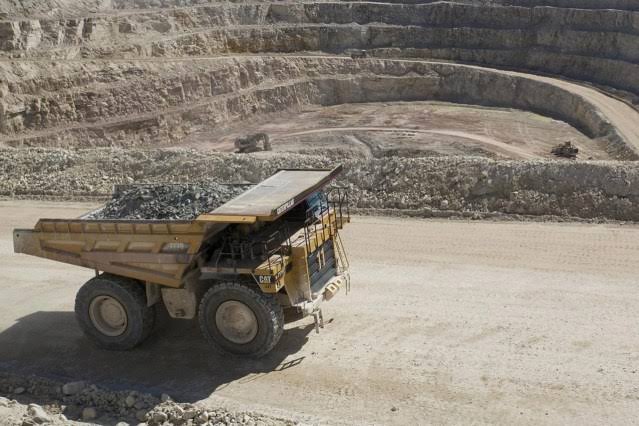
Here’s the first defiance. Despite the September 23, 2025 ICSID ruling explicitly
prohibiting any transfer of SOMAÏR’s uranium, Orano learned through media
reports in late November 2025 that a shipment had already left the Arlit mining
site.
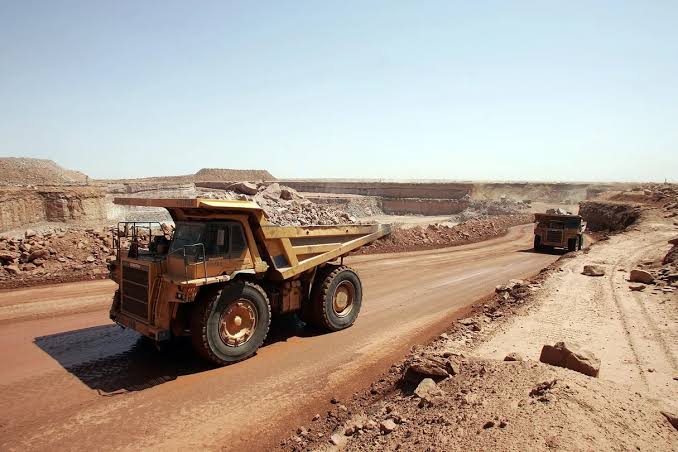
The scale and route matter for the region. Reporting indicated the shipment was
approximately 1,000 tonnes, routed through Burkina Faso toward the Port of
Lomé, destined for undisclosed buyers — meaning this uranium moved through
the exact AES trade corridors already documented elsewhere in this series.
Here’s the second, less-covered defiance. The same September ICSID ruling had
also ordered Niger to comply with a July 2025 Niamey Court of Appeal decision
requiring the release of Ibrahim Courmo, Orano’s representative in Niger, who the
company says had been “illegally held since May 2025.” Courmo’s detention
continued regardless.
This wasn’t a case of legal ambiguity or a company overreacting to a routine
commercial dispute. It was two specific, written orders from an international
tribunal, both directly defied, within the same ruling.
The financial stakes make the incentive clear. With over 1,300 tonnes of uranium
concentrate — valued at roughly €250 million — effectively immobilized by the
dispute before this shipment, the incentive to simply move product regardless of
the legal order was significant.
Why an International Court Order Couldn’t Actually Stop
a Truck
Here’s the structural weakness this episode exposes, and it’s the real educational
core of this piece. International arbitration rulings like ICSID’s depend
fundamentally on the losing party’s willingness to comply. There’s no independent
enforcement mechanism that can physically stop a government from moving
goods within, or out of, its own territory.
It’s worth presenting the sovereignty argument Niger’s government would make,
fairly. From Niamey’s perspective, ICSID represents a “Western-centred system of
investment arbitration” that has no legitimate authority to override a sovereign
nation’s control over resources within its own borders — the same “full
sovereignty” reasoning it used to justify the original nationalization.
The counterargument deserves equal weight. Orano and international legal
observers argue that defying arbitration rulings — especially ones a country’s
own courts had already helped enforce, as with the Niamey Court of Appeal’s own
ruling on Courmo’s detention — damages a country’s credibility for attracting
future foreign investment, regardless of how justified the underlying
nationalization might be.
The real stakes on both sides are worth naming. France sources roughly 70% of
its electricity from nuclear power, and Niger supplied around 15% of France’s
uranium imports before 2023. This dispute isn’t just symbolic — it touches a
meaningful share of an entire country’s energy security, while Niger’s government
is simultaneously exploring new buyers in Russia, China, and emerging Asian
markets to replace its historic reliance on French and EU purchasers.
The Myth vs. The Reality
| What people assume | What actually happened |
|---|---|
| International arbitration rulings like ICSID’s are legally binding and enforceable in the same way as domestic court orders | ICSID’s ruling had no independent mechanism to physically stop Niger from moving the uranium |
| This dispute is simply about a single shipment of uranium | Niger defied not one but two separate orders from the same ruling — the export prohibition and the detainee release order — within the same period |
| Niger’s uranium exports stopped once the ICSID ruling was issued | Roughly 1,000 tonnes moved out of the country in November 2025, over two months after the ruling |
| The uranium’s movement had no connection to the region’s other trade disputes | The shipment was routed through Burkina Faso to the Port of Lomé, tracing the same corridors already documented elsewhere in this series |
Why This Still Matters
This dispute sits at the exact intersection of everything this blog has been
tracing — a colonial-era resource relationship, a post-coup government
asserting sovereignty through nationalization, an international legal system with
real limits on enforcement, and a shipment that physically moved through the
same AES trade corridors already documented elsewhere in this series.
Orano may well eventually win compensation through arbitration. But the
uranium itself, and the detained representative, tell a more immediate story
about what happens when a resource-rich nation decides an international
court’s authority simply doesn’t apply to decisions it considers its own to make.