

Britain built Freetown to fight the slave trade.
It ended up becoming one of the most important commercial and military ports
on the entire West African coast — valuable for exactly the same reason any
trading port is valuable: geography, harbor access, and control of the coastline.
Tens of thousands of people, freed from illegal slave ships, were landed in this
one city over just a few decades. That’s the story most people know. What gets left
out is what happened next — how a settlement built for resettlement and
enforcement quietly became one of the region’s most important trade hubs.
Freetown wasn’t built as a trade port. It became one anyway — because that’s
what a well-placed harbor on that coastline was always going to become.
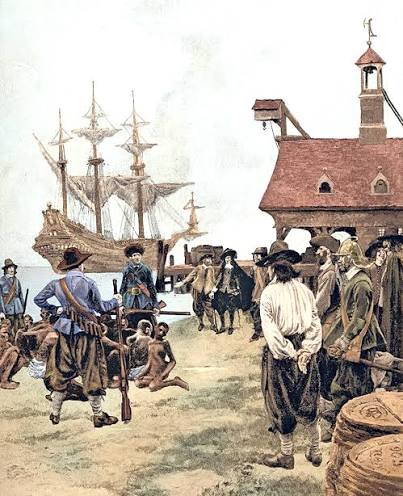
Here’s What Actually Happened
Let’s start at the real beginning, because Freetown’s founding story took more
than one attempt.
In 1787, British abolitionists led by Granville Sharp organized what they called the
“Province of Freedom” — a settlement for around 400 formerly enslaved and
impoverished Black Londoners, negotiated onto land purchased from local
Temne leadership. It’s worth being honest about what happened next: this first
attempt largely failed, and the settlement was destroyed in 1789.
The real founding moment came a few years later. In March 1792, roughly 1,200
Black Loyalists who had been relocated to Nova Scotia after the American
Revolutionary War arrived and formally established Freetown. In 1800, the
population grew again with the arrival of about 550 Jamaican Maroons — people
who had waged a long resistance against British rule in Jamaica before being
deported. Each of these groups added its own distinct culture and history to the
settlement.
Then came the formal turning point. Britain’s 1807 Slave Trade Act banned the
country’s own participation in the transatlantic slave trade. In 1808, Freetown
became a Crown Colony — and, critically, the headquarters of the Royal Navy’s
West Africa Squadron, the naval force tasked with patrolling the coast and
intercepting illegal slave ships.
Here’s the myth-check. Freetown wasn’t founded by Britain as a trade port at all.
Its earliest purpose was resettlement and anti-slavery enforcement. Its later
importance as a center of trade came afterward, as a consequence of
geography and infrastructure already in place — not as the original intent
behind the city’s founding.
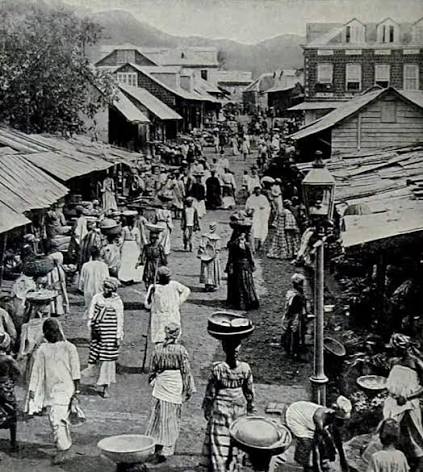
What the Navy Actually Built There
It’s worth being specific about what the West Africa Squadron actually did, and
what it left behind as a result.
As the squadron intercepted slave ships along the coast, it landed the people it
rescued — known as “recaptives” or Liberated Africans — directly in Freetown.
More than 80,000 people were freed through courts operating there between 1808
and 1871.
That created an extraordinarily diverse population, drawn from communities
across West Africa, who together formed the foundation of Freetown’s Creole
community — with its own distinct language, culture, and, in time, a significant
commercial and professional class.
None of this happened without infrastructure. Britain had to build courts, a
naval base, missions, and colonial administration in Freetown to run this
operation. None of it was built with trade in mind. But all of it created exactly the
kind of institutional and physical infrastructure a functioning trading port
actually needs — administration, security, a stable population, and international
legal standing.
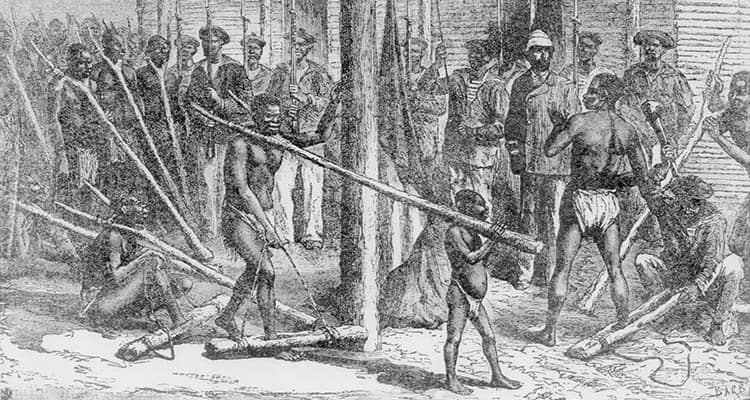
From Anti-Slavery Base to Trade Port
Here’s the pivot, stated plainly: Freetown sits on one of the best natural harbors
on the entire West African coast — by some measures, the third largest natural
harbor in the world. Once the anti-slavery patrol infrastructure existed there, it
was a short step to using that same port for commercial shipping.
This connects directly to a shift already covered in this series. As steam-powered
shipping expanded through the 19th century, ships needed coaling stations
along their trade routes to refuel. Freetown’s harbor made it a natural, heavily
used coaling stop — cementing its role in the regional trade and shipping
networks that steamships were reshaping across the whole West African coast.
There was real debate in Britain, late in the 19th century, about whether Freetown
should even be maintained as a naval and coaling station at all. By 1896, that
debate was settled — its importance was no longer in question.
And the Creole community that had formed out of resettlement and rescue
became central to this commercial shift. Descendants of the settlers and the
Liberated Africans went on to become prominent merchants and traders,
connecting Freetown commercially not just to Britain, but across the wider West
African coast.
The Myth vs. The Reality
| What people assume | What actually happened |
|---|---|
| Freetown was founded as a trading port, like other West African colonial cities | It was founded as a resettlement project and later became the headquarters for anti-slavery naval enforcement — trade came afterward |
| Its main historical role was purely as a naval base | The infrastructure, harbor access, and population built for that naval role became the direct foundation for its later trade and shipping importance |
| The population of Freetown was primarily British colonial administrators and settlers | It was built from three distinct waves — Black Loyalists from Nova Scotia, Jamaican Maroons, and over 80,000 Liberated Africans rescued from slave ships |
| Freetown’s commercial rise had nothing to do with its anti-slavery history | Its Creole merchant class descended directly from the settlers and recaptives the anti-slavery operation brought there |
Why This Still Matters
This is the same pattern that keeps showing up across this series: infrastructure
built for one purpose in West Africa repeatedly got repurposed for trade and
colonial commercial control. Freetown’s transformation from anti-slavery
enforcement base to trade port is one of the clearest examples of that pattern in
the entire region.
The same harbor, courts, and population that were built to fight the slave trade
became the exact foundation Britain used to run legitimate commerce and coal
its steamships through the region for the rest of the colonial era.
Next in this series: how West Africa’s own indigenous trade networks — the ones
running long before any of these institutions or technologies arrived — actually
worked.