

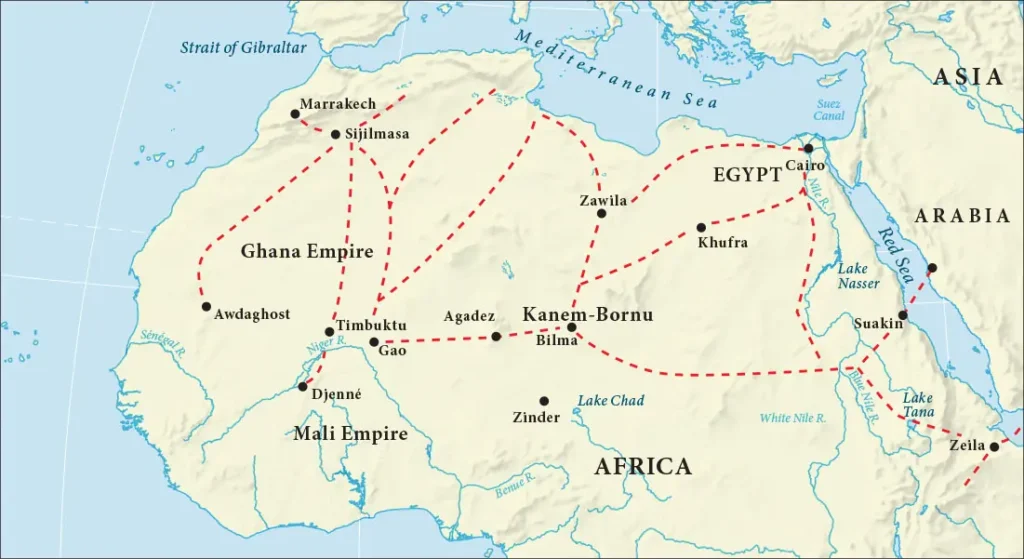
Kano had been one of the great trading cities of the trans-Saharan network for
centuries. Its woven textiles and leather goods traveled by camel caravan to
markets across North and West Africa, part of a commercial system that
predated European colonization by hundreds of years.
In 1912, a railway line reached the city.
And almost overnight, a city that had spent centuries exporting north, across the
desert, was rewired to export south — to a coastal port it had never depended on
before, built by people who had never once crossed the Sahara.
This wasn’t just a train arriving. This was the final redirection of a trade network
that had run north for a thousand years — now pointed south instead.
Here’s What Actually Happened
Quick anchor back to a shift already covered in this series: rivers and steamships
had started pulling West African trade toward the coast by the mid-1800s. But
steamships had a limit — they could only go where the water went, and Kano itself
sits well inland, off the Niger. Reaching a city like Kano needed something else.
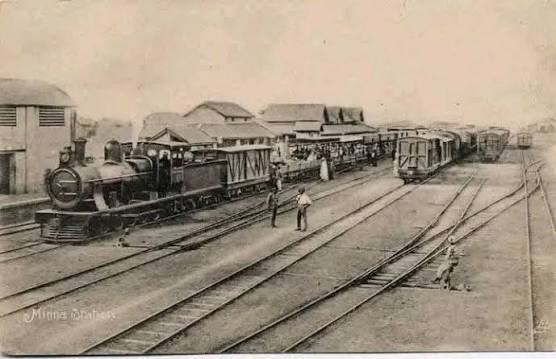
Here’s how the railway actually came together. The Lagos line began construction
at Iddo in 1898, reached Ibadan by 1901, and Jebba, on the Niger, by 1909.
Separately, the Baro-Kano railway was built northward from Baro, on the Niger,
starting in 1907, reaching Kano by 1911. The two lines connected at Minna, and the
full Lagos-Kano route opened to traffic on January 1, 1912. By October 3, 1912, the
two administrative systems running these lines were formally merged into a
single Nigerian Railway.
Here’s the myth-check. This wasn’t Britain’s first attempt at reaching West Africa’s
interior — it’s the direct successor to the steamship era already covered in this
series. But the railway did something steamships couldn’t do. A steamship could
only follow a river. A railway could go wherever track was laid, regardless of
geography — which meant it could finally reach interior cities like Kano that river
trade alone could never fully connect to the coast.
Why Kano Specifically Mattered
It’s worth being precise about what Kano actually was before any of this. For
centuries, it had been a major hub in the trans-Saharan trade network —
exporting woven textiles and leather goods by camel caravan to markets across
North and West Africa. This wasn’t a city waiting to be discovered or organized by
colonial administrators. It was an existing, established commercial power center
with its own deep trading relationships, built entirely independent of Europe.
Once the railway reached Kano, the economic logic of the city flipped. Instead of
goods moving north by caravan toward Mediterranean markets, the British-built
line was specifically designed to move agricultural produce — groundnuts,
cotton, hides — south, to Lagos, for export overseas.
The groundnut example makes this concrete. This railway is the direct
infrastructure behind the “Kano groundnut pyramids” — the massive,
photographed stacks of bagged groundnuts that became a visual symbol of
northern Nigeria’s colonial export economy. That mass-scale groundnut export
wasn’t possible before the railway. The line is what made it physically and
economically viable.
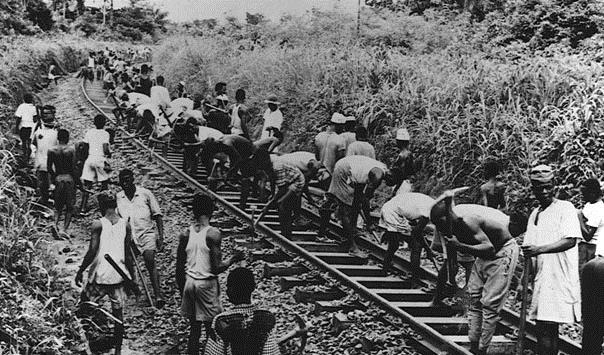
And this wasn’t only about moving goods. The railway moved administrative and
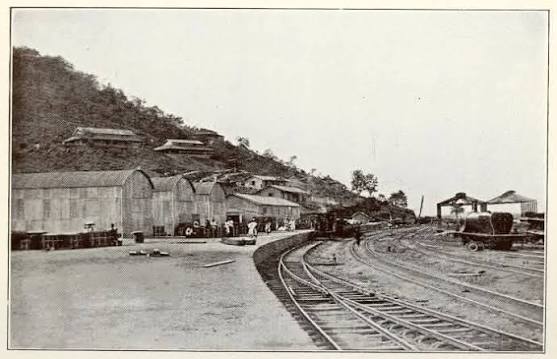
military reach as well. Colonial trading depots sprang up at stations along the
line — Kaduna, Kafanchan, Jos, and others — turning the rail corridor itself into
the new backbone of colonial commercial and political control across the north,
not just a shipping route.
The Trade Network That Lost
Bring back the throughline from the steamship story: trans-Saharan trade had
already been declining for decades before 1912. But Kano itself had remained a
genuine, functioning hub within that older network right up until the railway
arrived.
Here’s what the railway actually did to that role — and it’s a more precise story
than simple destruction. It didn’t erase Kano’s importance. It captured it. The
railway rerouted the city’s trade relationships away from centuries-old North
African and trans-Saharan commercial partners and toward a colonial coastal
economy — one built on companies, currency systems, and infrastructure
already covered elsewhere in this series.
That’s what “the end of the trans-Saharan trade monopoly” actually means here.
Trade moving north across the desert didn’t stop completely and instantly. What
ended was Kano’s economic gravity being pointed primarily toward
Mediterranean and North African markets. After 1912, it was structurally
redirected toward a British colonial port instead.
The Myth vs. The Reality
| What people assume | What actually happened |
|---|---|
| The railway simply modernized Kano’s existing trade | It redirected Kano’s trade relationships away from centuries-old trans-Saharan and North African markets toward a British colonial export economy. |
| Trans-Saharan trade collapsed suddenly and completely once railways arrived | Kano had remained a functioning trans-Saharan hub for centuries and only lost that central role once the specific 1912 rail connection redirected its trade south |
| The railway was primarily a transportation upgrade | It also extended colonial administrative and political control, with trading depots along the line becoming new centers of commercial and political power |
| Kano’s importance as a trading city ended with colonization | Kano remains one of Nigeria’s most important commercial centers today — what changed was the direction and terms of its trade, not its significance |
Why This Still Matters
This is the ground-level, city-specific version of the steamship story already told
in this series — infrastructure determining who controls trade, and toward whom
that trade actually flows.
Kano didn’t stop being a major trading city in 1912. It’s still one of Nigeria’s most
important commercial centers today. But the direction and terms of its trade
were permanently reshaped by a rail line built to serve a colonial export
economy — not the trans-Saharan network that had built the city’s reputation in
the first place.
Next in this series: how West Africa’s own indigenous trade networks — the ones running
long before any of these institutions or technologies arrived — actually worked.