

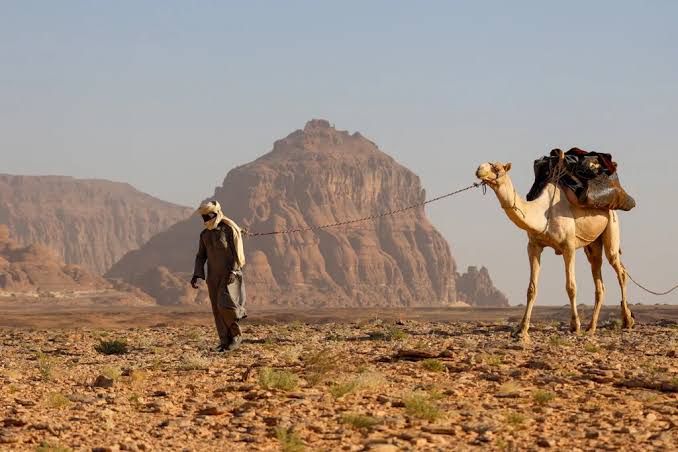
For over a thousand years, camel caravans — sometimes stretching for miles,
made up of thousands of camels — carried gold, salt, and goods across the
Sahara. They built empires along the way. Ghana, Mali, Songhai — kingdoms
whose wealth and power were built directly on controlling that desert trade.
Then, in the space of a few decades, a technology arrived that made that entire
system look obsolete almost overnight.
It wasn’t a single dramatic battle. It wasn’t one invention. It was a boat — plus a
pill.
This isn’t just a transportation story. This is the story of how control over West
African trade physically moved from the desert to the coast — and exactly who
benefited when it did.
Here’s What Actually Happened
Quick recap, since this connects directly to an earlier piece in this series: camel
caravans had linked West Africa’s interior to North Africa and the Mediterranean
for centuries, moving gold, salt, and goods through great trading cities like
Timbuktu and Gao.
Here’s the obstacle Europeans faced for a very long time. They could sail along
the West African coast easily enough — that had been happening since the 15th
century. But getting into the interior was another matter entirely. Tropical
disease, especially malaria, killed European explorers and traders who
attempted to travel upriver in large numbers. The coast was accessible. The
interior, for centuries, effectively wasn’t — at least not for Europeans trying to
establish permanent trade there.
The turning point came around 1854. That’s when the combination of quinine —
an effective treatment for malaria — and steamship technology solved both
problems holding Europeans back at once: they could now survive the journey
upriver, and they had a vessel capable of making it.
Here’s the myth-check. This wasn’t an overnight replacement of one trade system
by another. Trans-Saharan trade had already been destabilizing for centuries
before steamships entered the picture — disrupted by events like the Moroccan
conquest of Songhai in 1590, and gradually undercut by European coastal
shipping routes established as early as the 15th and 16th centuries. The
steamship era of the mid-to-late 1800s wasn’t the first blow to trans-Saharan
trade. It was the final, decisive one.
Why a Boat Beat a Caravan
The economics here are worth spelling out plainly, because the shift wasn’t
marginal — it was a fundamentally different cost structure. River barges and
steamships could carry vastly more cargo per trip than camel caravans or
human porters, at a fraction of the cost and time. This wasn’t an incremental
efficiency gain. It made an entirely different kind of trade possible.
That changed the geography of trade itself. Goods that once had to move north
across the desert to reach Mediterranean ports could now move west and south,
directly to the Atlantic coast — cutting the desert middlemen out of the chain
almost entirely.
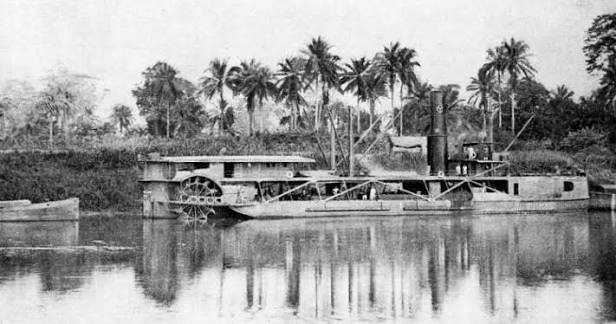
There’s a specific example that captures exactly how contested this shift was. In
the 1870s, a merchant named Alexander Miller sent a steamship called the Sultan
of Sokoto up the Niger, specifically to bypass coastal middlemen and trade
directly with the interior. In 1876, the ship came under heavy attack from the
riverbanks — suspected to have been organized by rival Liverpool merchants
and traders in Brass who had every reason to oppose Miller cutting them out of
the trade. The attack forced the ship out of operation. That kind of violent
resistance shows just how high the stakes were for anyone whose livelihood
depended on the old trading structure.
This is also the exact technological shift that made a company like George
Goldie’s National African Company — soon to become the Royal Niger Company
— viable in the first place. Steamers were how a private company could actually
project commercial and political control deep into the interior, without needing
to rely on the merchant networks and river barges that had moved goods along
the Niger for centuries before them.
Who Won, Who Lost
Some of the losses here are direct and easy to name. North African merchant
communities along the old caravan routes lost their central role in regional trade. Tuareg
and Sanhaja groups, whose political and economic power had been built on controlling
desert trade routes and taxing the caravans passing through their territory, lost the
foundation of that power. Sahelian trading towns that had thrived for centuries as inland
hubs lost their strategic importance almost overnight.
But the decline wasn’t a straight line, and it’s worth being accurate about that. In some
regions — the Tripoli-to-Kano route through Damergu is a well-documented case —
trans-Saharan trade actually saw a real revival in the mid-to-late 19th century, as
“legitimate commerce” grew and North African merchants moved south to take advantage
of new opportunities. That revival didn’t last. The arrival of French colonial forces in the
region eroded what remained of the old trade networks and the political power that had
been built on them, finishing what steamships and coastal trade had already started
elsewhere.
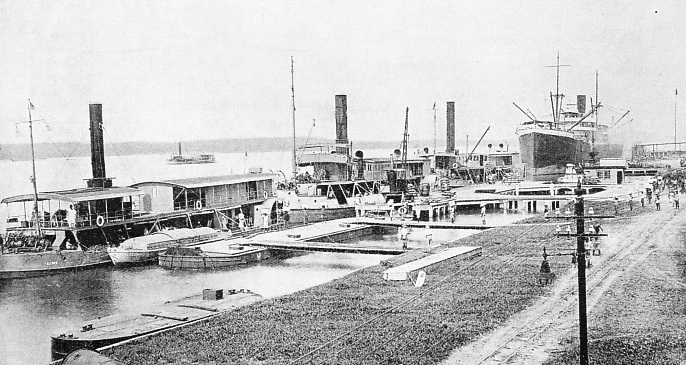
And the winners are just as clear. Coastal trading firms, chartered companies, and the
European powers backing them could now project trade and political influence hundreds
of miles inland — without ever needing to cross the desert or negotiate with the merchant
networks that had controlled that route for a thousand years.
The Myth vs. The Reality
| What people assume | What actually happened |
|---|---|
| The steamship single-handedly ended trans-Saharan trade | Trans-Saharan trade had already been destabilizing for centuries; the steamship era delivered the final, decisive blow, not the first one |
| This is purely a story about transportation technology | It’s also a direct transfer of economic and political power — from interior trading powers to coastal and European interests |
| Trans-Saharan trade declined in a steady, uninterrupted line | Some regions saw a genuine revival of trans-Saharan trade in the mid-to-late 1800s, before French colonial conquest finished eroding it |
| Africans had no stake in resisting this shift | Traders directly threatened by the new river trade violently resisted it — as shown by the attack on the Sultan of Sokoto |
Why This Still Matters
This is the transportation story sitting behind the institutional stories already
covered in this series — the Royal Niger Company, French West Africa, the
currency systems built to serve colonial export economies. None of those
institutions could have projected control into the interior the way they did
without this shift from desert routes to river and coastal trade.
West Africa’s trade geography didn’t just shift because a new technology showed
up. It shifted because that technology determined who could physically reach the
interior and who couldn’t — and that, in turn, determined who got to profit from
everything moving through it.
Next in this series: how West Africa’s own indigenous trade networks — the ones
running long before any of these institutions or technologies arrived — actually
worked.