
A Historical In-depth Discovery of Trade in West Africa Since 1896
Here’s what you need to know:
- B’Odogwu, Nigeria Customs Service’s homegrown Unified Customs Management System, launched October 23, 2024, replacing NICIS II — a system previously run by foreign firm Webb Fontaine, whose contract expired amid Customs’ own concerns about data control and cybersecurity.
- The scandal: within months of expanding beyond its initial pilot, freight forwarders and licensed customs agents raised sustained complaints about delays and demurrage charges linked to the rollout, serious enough that Customs leadership held both a July 2025 town hall and a separate August 2025 meeting with the Nigerian Shippers’ Council specifically to address them.
- Alongside the platform, Customs introduced a new 4% Free On Board charge explicitly designed to replace three existing levies — the 1% Comprehensive Import Supervision Scheme fee and the 7% cost of collection — a real structural change to how import costs get calculated, not just a new piece of software.
Nigeria Customs built B’Odogwu specifically to prove it could design and run its own customs technology, rather than depending on a foreign contractor. Being homegrown, it turns out, didn’t mean being free of the growing pains that come with any major system rollout.
Section One: Promised
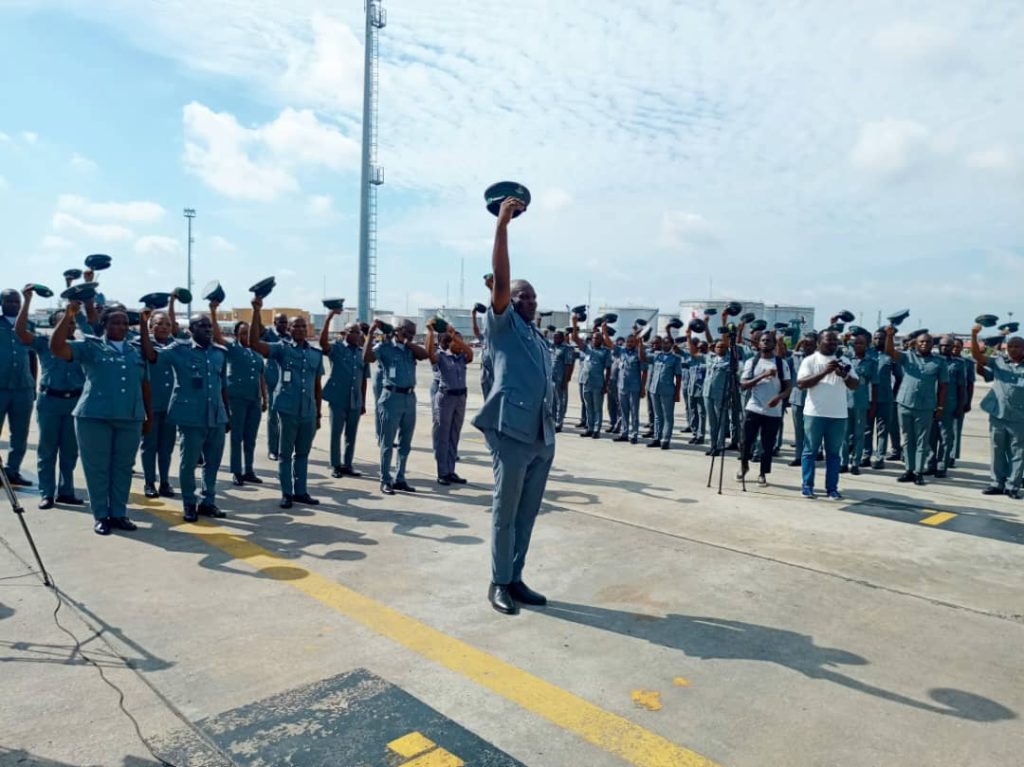
What B’Odogwu was actually built to replace matters here, since the sovereignty angle is worth explaining. It succeeded the Nigeria Integrated Customs Information System (NICIS II), a platform run by the foreign firm Webb Fontaine, whose contract with Customs expired between 2021 and 2022 — a transition driven partly by Customs’ own stated concerns that its data “was not fully under its control” under the previous arrangement, alongside worries about cyberattack vulnerability.
It’s worth unpacking what “unified customs management system” actually means technically. Rather than separate tools for different clearance functions, B’Odogwu integrates electronic cargo tracking, automated risk management, and non-intrusive scanning into one platform — the same kind of consolidation logic already documented elsewhere in this section’s coverage of single-window systems.
The stated ambitions Customs leadership attached to the platform are worth noting. Comptroller-General Bashir Adewale Adeniyi described B’Odogwu as “not merely an upgrade but a fundamental shift in customs operations,” built in-house by NCS’s own ICT officers specifically to make trade clearance “more transparent, efficient, and resistant to corruption.”Paste the first body section here.
Section Two: Delivered So Far
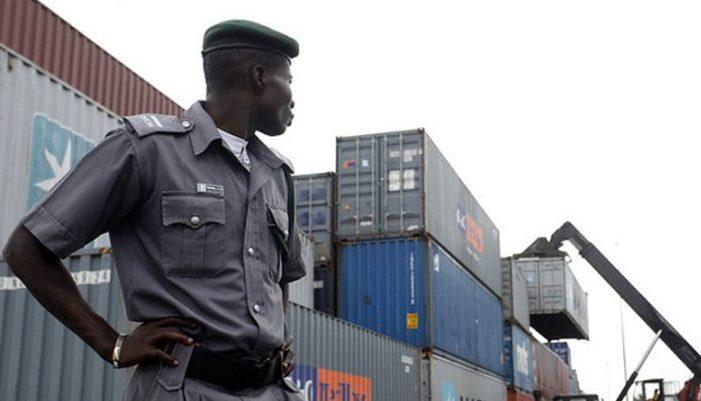
The actual rollout timeline is worth bringing in directly, since real, phased progress genuinely occurred. B’Odogwu launched on October 23, 2024, at the PTML Customs Command in Lagos as a pilot, before expanding to the Apapa and Tin Can Island ports by March 2025 — with Adeniyi specifically clarifying that expansion was “a pre-launch, not a full launch, because we are deploying it at a bigger command.”
The institutional backing behind the platform is worth noting. B’Odogwu operates as a Public-Private Partnership between Nigeria Customs Service and Trade Modernization Project Limited, backed by Federal Executive Council approval granted in April 2023, positioned as a core component of Nigeria’s broader plan for a National Single Window.
There’s a fee restructuring introduced alongside the platform worth bringing in, since it’s a genuine, concrete policy change. The new 4% Free On Board charge is designed to replace the previous 1% Comprehensive Import Supervision Scheme fee and the 7% cost of collection, with Adeniyi explaining the new structure means “100% of Customs revenue will go into the Federation Account.” Paste the second body section here.
Section Three: Still Pending
What remains unresolved even after the phased rollout is worth explaining, since Customs’ own public statements acknowledge ongoing work. As of mid-2025, Deputy Comptroller-General Kikelomo Adeola, overseeing ICT and Modernisation, continued to emphasize “the strategic importance of stakeholder collaboration” — language suggesting the platform’s full stabilization was still actively in progress.
Customs’ own acknowledgment that feedback wasn’t uniformly positive is worth noting. Adeniyi stated directly during the July 2025 town hall that stakeholder feedback “has not been entirely negative” — a specific phrasing that, by implication, concedes real negative feedback existed alongside the positive.

The Scandal: The Red Flags
Here’s the piece’s central documented concern. Freight forwarders and licensed Customs agents raised specific concerns about delays, demurrage charges, and broader operational challenges tied to the B’Odogwu rollout — complaints serious enough to require direct intervention from Customs’ top leadership.
The specific, repeated nature of these interventions shows the concerns weren’t quickly resolved. Adeniyi held a town hall meeting on July 21, 2025, specifically themed “Enhancing Trade Compliance and System Optimisation Through Stakeholder Engagement” — and then, less than a month later, on August 19, 2025, met separately with the Nigerian Shippers’ Council’s Executive Secretary specifically to address the same category of ongoing complaints.
The Shippers’ Council’s own characterization of the issues is worth quoting directly, since it names the specific operational categories affected. The Council’s feedback, conveyed through Executive Secretary Akutah Ukeyima, specifically noted “operational challenges related to system integration, documentation, and port logistics” — a broad set of concerns spanning the platform’s technical, procedural, and physical dimensions all at once.
This wasn’t a single early hiccup quickly resolved. It was a documented pattern of stakeholder complaints requiring at least two separate rounds of high-level government-industry meetings across consecutive months, with Customs’ own leadership publicly acknowledging that reception had “not been entirely” positive.
The Myth vs. The Reality
| What people assume | What actually happened |
| B’Odogwu’s homegrown development meant it avoided the kind of implementation problems associated with foreign-run predecessor systems | It was built specifically to address sovereignty and data-control concerns tied to its foreign-run predecessor, but still generated sustained stakeholder complaints requiring repeated high-level intervention |
| The platform’s rollout proceeded smoothly from its October 2024 launch onward | Customs’ own leadership publicly acknowledged mixed feedback rather than claiming uniform success |
| The switch to B’Odogwu was purely a technical software upgrade | It came bundled with a genuine structural change to import fee calculation, replacing three existing levies with a new 4% Free On Board charge |
| Complaints about the rollout were minor and resolved quickly | They required two separate high-level stakeholder meetings across consecutive months, in July and August 2025 |
Close: Homegrown Doesn’t Mean Growing Pain-Free
Building customs technology in-house genuinely solved a real sovereignty and cybersecurity concern tied to B’Odogwu’s foreign-run predecessor — but it didn’t automatically solve the harder, more universal challenge every major clearance system rollout faces, getting real-world integration, documentation, and logistics working smoothly for the traders who actually depend on it every day.
This joins Ghana’s Publican AI and Eto systems, both already documented elsewhere in this blog’s Customs, Logistics & Infrastructure coverage, as further evidence that a technically sound customs platform and a smooth experience for the traders using it are two different achievements — and getting the first one right doesn’t guarantee the second.
Sources and further reading.