

A Historical In-depth Discovery of Trade in West Africa Since 1896
Here’s what you need to know:
- SCOA wasn’t founded by French rivals splitting from CFAO, as sometimes assumed — it was founded by two Swiss merchants, Hans Ryff and Wilhelm Roth, who began trading in Sierra Leone and French Guinea in 1898 and formally incorporated the company in December 1906.
- By 1940, SCOA operated 250 trading posts across nine West African territories, competing directly with CFAO for the exact same markets, the exact same commodities, and the exact same colonial infrastructure.
- The scandal: a 1921 accident involving an SCOA-operated ferry off Côte d’Ivoire produced a landmark French legal ruling — the “Bac d’Eloka” case — that’s still taught in French law schools today, exposing how deeply colonial trading companies had become entangled with public infrastructure and administration.
- The century-long rivalry ended not in competition but in absorption: struggling financially, SCOA was gradually bought out by CFAO between 1994 and 1996, and formally dissolved in 1998 — the hunter finally caught by its oldest rival.
For nearly a century, two French-flagged trading houses fought for control of the exact same West African markets, the exact same commodities, and often the exact same towns.
This is that fight, told round by round, ending with the one round where it stopped being a fight at all.
Round One: The Opening Bell
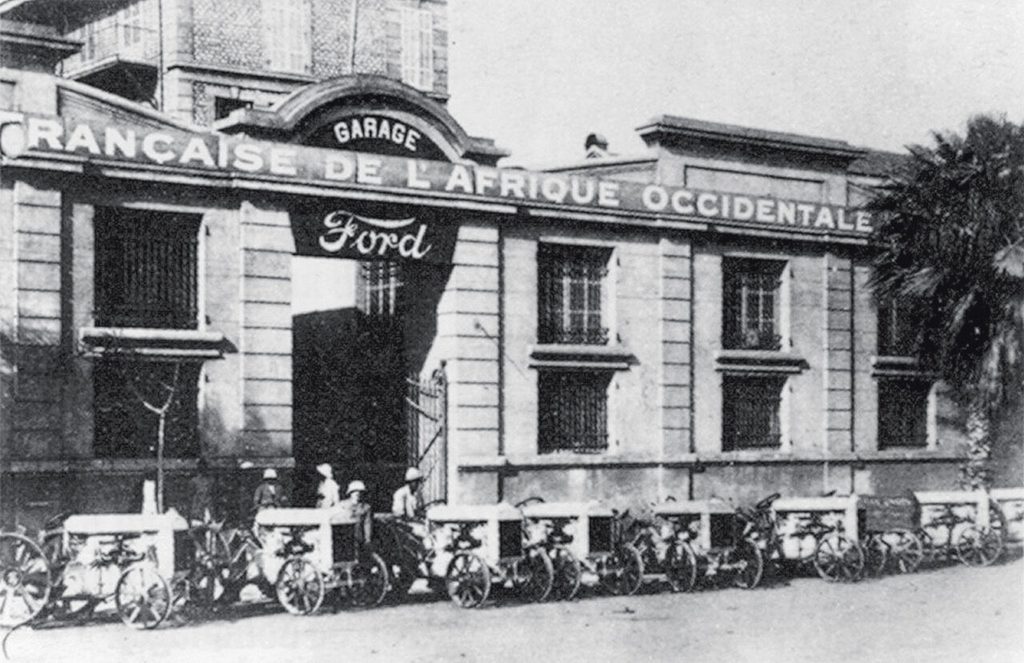
It’s worth correcting a common assumption directly, since it matters for understanding the rivalry’s real origins. SCOA wasn’t founded by disaffected former CFAO employees splitting off to compete. It began as a genuinely separate venture, started by two Swiss merchants, Hans O. Ryff and Wilhelm F. Roth, who opened trading posts in British Sierra Leone (at Bonthe) and French Guinea (at Dubréka) starting in 1898.
The formal incorporation is worth tracing precisely. The partnership was converted into a joint-stock company with 3 million francs in capital, officially constituted on December 6, 1906, with its first board meeting held April 4, 1907 — meaning SCOA’s formal corporate founding came nearly two decades after CFAO’s 1887 establishment, entering an already-competitive field rather than starting simultaneously.
It’s worth explaining what both companies actually sold, since it explains why this was destined to be a direct rivalry rather than complementary businesses. SCOA sold European manufactured goods to local populations and settlers in its African trading posts, while exporting the exact same raw materials CFAO specialized in — peanuts, palm oil, cocoa, hides, rubber, and cotton. Both companies were fighting over identical supply chains and identical customers from day one.
The Scandal: The Ferry Accident That Became a Legal Landmark
Here’s a genuinely fascinating piece of legal history most business retellings of SCOA’s story leave out entirely. In 1921, an accident involving a ferry operated by SCOA off the coast of Côte d’Ivoire led to a legal dispute that reached France’s Tribunal des Conflits — the court responsible for determining whether a case falls under public or private legal jurisdiction.
It’s worth explaining what the “Bac d’Eloka” ruling actually established, since it’s still taught in French law schools today. The January 22, 1921 decision helped establish the legal principle that when a private company operates a public-facing service of an industrial or commercial nature — even one connected to colonial infrastructure — disputes arising from it could fall under private law rather than the special protections of public administrative law.
This wasn’t simply a maritime accident that faded into obscurity. It became a foundational case in French administrative law specifically because SCOA’s operations had become so entangled with public infrastructure and colonial governance that courts needed to formally define where the company’s private commercial activity ended and public administrative responsibility began — a legal question that wouldn’t need asking if trading companies like SCOA hadn’t already blurred that line so thoroughly in practice.
Round Three: The Split Decision (1946)
Bring back the shared dominance already documented elsewhere in this blog’s coverage. By 1946, CFAO and SCOA together represented 84% of the total market capitalization of every listed corporation in French West Africa — meaning that after decades of direct competition, both rivals had ended up co-dominating the entire regional economy rather than either one eliminating the other.
Think of this as a genuine “split decision” in boxing terms. Neither company had knocked the other out through open competition. Instead, both had grown so large, competing for the exact same markets, that together they had squeezed out virtually every other competitor, effectively splitting a near-total monopoly between just the two of them.
The Final Round: When the Fight Actually Ended
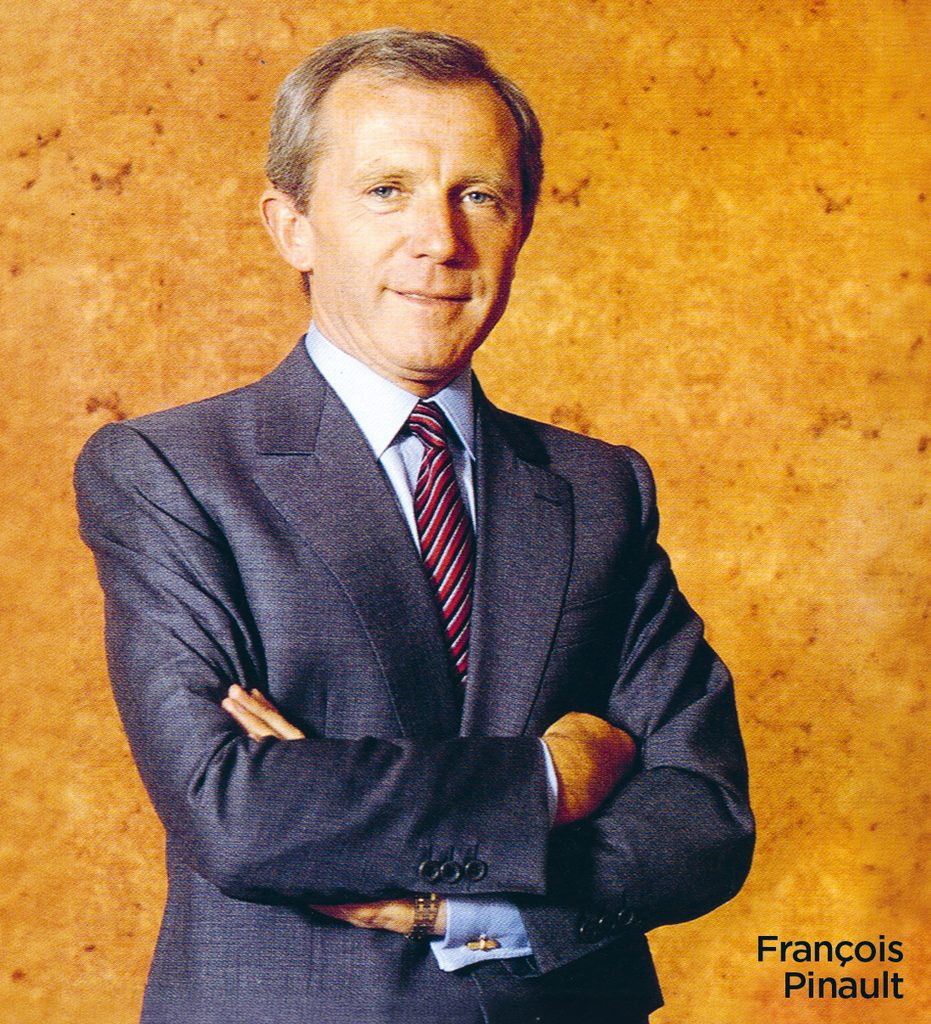
Bring the story to its actual conclusion, since most retellings of either company’s history treat them as separate stories rather than one continuous rivalry with a real ending. By the 1990s, SCOA was in serious financial difficulty, and between 1994 and 1996, its oldest rival, CFAO — by then a subsidiary of French luxury conglomerate Pinault-Printemps-Redoute — gradually acquired the struggling company outright.
The ending is worth stating precisely. SCOA was formally dissolved in 1998, ninety-two years after its December 1906 incorporation, absorbed entirely into the rival it had competed against for nearly the entire span of its existence.
This wasn’t a rivalry that ended in mutual decline, or in both companies gracefully retiring from the field as African economies modernized past them. It ended with one absorbing the other completely — the same pattern of consolidation that had defined French West African commerce since Alfred Jones’s shipping cartel and CFAO’s own 1887 rise, already documented throughout this blog.

The Myth vs. The Reality
| What people assume | What actually happened |
| SCOA was founded by French rivals breaking away from CFAO specifically to compete with it | SCOA was an independently founded venture, started by two Swiss merchants, that grew into direct competition with CFAO over the following decades |
| CFAO and SCOA’s 92-year rivalry ended in a natural, mutual decline as colonial-era trading houses became obsolete | The rivalry ended specifically because CFAO acquired its struggling competitor outright between 1994 and 1996, dissolving it completely by 1998 |
| CFAO and SCOA operated in separate, complementary regions of West Africa | Both companies built nearly identical territorial footprints across nine to eleven West African territories, competing head-to-head for decades |
| SCOA’s business dealings were purely commercial, with no entanglement in colonial legal or administrative questions | A 1921 accident involving an SCOA ferry produced a landmark French legal ruling still taught in law schools today |
Close: The Fight That Only Ever Had One Real Winner
For most of the twentieth century, CFAO and SCOA looked like genuine rivals, competing hard enough to jointly capture 84% of an entire regional economy between them. But competition between two dominant firms sharing that much market power was never really a fair fight for anyone else operating around them, and eventually, it stopped being a fight between the two of them either.

Sources and further reading.