
A Historical In-depth Discovery of Trade in West Africa Since 1896
Here’s what you need to know:
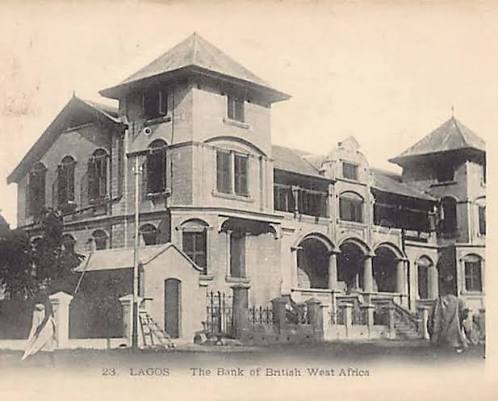
- Wikipedia’s own account of BBWA’s history states plainly: the bank “primarily financed foreign trade, but did little lending to indigenous Nigerians, who had little to offer as collateral for loans,” a pattern that persisted until after Nigeria’s 1960 independence.
- This exclusion was documented and formally protested by Nigerian traders themselves: a pamphlet titled “An Appeal from the Native Traders of Lagos to the Financiers of Great Britain” directly accused BBWA of charging rates that were “excessively high… even… exorbitant” and displaying “intolerance in business matters.”
- The scandal escalated well beyond a written complaint — a delegation of Nigerian traders, led by a man named Samuel Duncan, traveled all the way to London specifically to confront BBWA’s own leadership about “the monopolistic position of the British Bank of West Africa, particularly their refusal to extend credit to indigenous African traders.”
The Pattern: What “Little Lending to Indigenous Nigerians” Actually Meant
It’s worth explaining precisely why BBWA’s lending decisions worked this way, since the stated justification and the underlying reality reveal two different things. The formal explanation, repeated across historical accounts, centers on collateral: “because lending required collateral that many indigenous traders lacked, early credit provision was largely extended to foreign or European enterprises.” Nigerian traders operating within traditional commercial structures often didn’t hold the kind of individually-titled, Western-legal-system-recognized property that British banking practice treated as acceptable loan security — meaning even a genuinely creditworthy Nigerian merchant, with a real, functioning business and real trading relationships, could be excluded from formal credit simply because his assets didn’t fit the specific legal category BBWA’s lending model required.
It’s worth understanding the broader economic structure this exclusion operated within, since it wasn’t simply a matter of individual loan applications being rejected one at a time. Academic research on Nigeria’s colonial banking history documents that “savings generated in Nigeria were invested in London rather than converted into domestic lending” — meaning the deposits Nigerian customers placed with BBWA didn’t primarily circulate back into the Nigerian economy as loans to Nigerian businesses, but flowed instead toward investment in Britain. What lending did occur within Nigeria went overwhelmingly “to European trading firms whom in-turn lent to produce buyers” — meaning Nigerian traders who did access credit at all often did so only indirectly, as sub-borrowers one layer removed from the actual bank, dependent on a European intermediary firm’s own willingness to extend further credit downstream.
The Protest: What Nigerian Traders Actually Said About This, in Their Own Words
Here is the piece’s central, most directly documented finding, worth presenting in full since it represents Nigerian merchants’ own contemporary voice rather than a later historian’s reconstruction. Nigerian traders in Lagos formally protested BBWA’s practices by publishing a pamphlet titled “An Appeal from the Native Traders of Lagos to the Financiers of Great Britain.” The document made specific, pointed accusations: it alleged BBWA charged “rates which were excessively high… even… exorbitant,” and stated the bank displayed “intolerance in business matters.” The pamphlet’s own conclusion, worth quoting directly, framed the problem as a genuine structural crisis rather than a series of isolated grievances: “the crying need of Southern Nigeria in the present stage of development of the country is for banking facilities — for the establishment of two or three banks.” This wasn’t a request for BBWA to change its own practices — it was a direct call for competition, on the grounds that BBWA’s monopoly position itself was the root of the problem.
There is a further, genuinely striking escalation worth including, since it shows this grievance moved from a written pamphlet into direct, in-person confrontation. A delegation of Nigerian traders, led by a man named Samuel Duncan, traveled to London specifically to make their displeasure known “about the monopolistic position of the British Bank of West Africa, particularly their refusal to extend credit to indigenous African traders.” This detail deserves emphasis: rather than simply airing grievances locally, Nigerian merchants organized themselves well enough, and felt strongly enough about this exclusion, to cross the Atlantic and confront BBWA’s own leadership directly, in the bank’s home city, about its lending discrimination.
The Consequence: An Alternative Banking Movement, With Mixed Results
It’s worth tracing what actually happened as a result of this sustained protest, since the response reveals both genuine African agency and a genuinely difficult structural obstacle that agency alone couldn’t fully overcome. The exclusion documented by Nigerian traders directly fueled “the massive demand for indigenously owned banks,” reflecting Nigerians’ disenchantment with “aspects of the prevailing financial system which did not take their interest into account.” This produced a real, documented wave of indigenous banking ventures — the first attempt, the Industrial and Commercial Bank, was established in 1929, followed in the 1940s and 1950s by institutions including the National Bank of Nigeria and African Continental Bank, the latter already extensively documented elsewhere on this blog in connection with Nnamdi Azikiwe’s own political career.
It’s worth being honest about how difficult this alternative path actually proved, since it complicates any simple narrative of Nigerian banking simply overcoming colonial exclusion through indigenous initiative alone. Of the 24 indigenous banks established between 1929 and 1952, only four survived until 1960 — and even those four survived “primarily due to government aid rather than their success” on purely commercial terms. Regulatory tightening compounded this difficulty: a 1958 banking ordinance raised minimum capital requirements substantially, making it considerably harder for smaller, Nigerian-owned institutions to remain compliant and solvent. This means the exclusionary lending practices BBWA and the other colonial banks maintained didn’t simply create an obvious gap that Nigerian entrepreneurs could straightforwardly fill on their own — the broader colonial financial and regulatory environment made building durable, independent alternative institutions genuinely difficult, well beyond the specific question of individual loan collateral.
Close
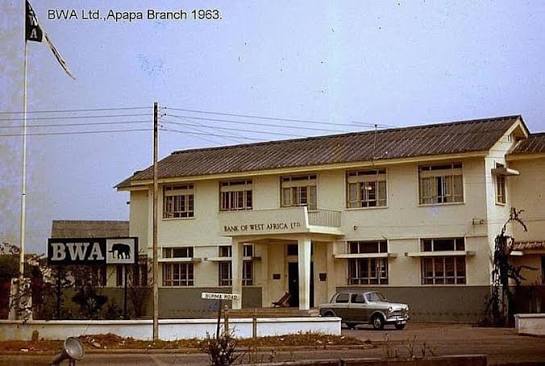
BBWA’s lending practices weren’t simply a passive byproduct of differing collateral standards — they were documented, contemporaneously protested, and formally challenged by Nigerian traders who understood precisely what was happening to them and organized a genuine, sustained response, from a published pamphlet through a delegation that traveled directly to London to confront the bank’s own leadership. That protest helped fuel a real indigenous banking movement, but the broader colonial financial environment — tightening capital requirements, a banking sector still overwhelmingly oriented toward financing European trade rather than domestic Nigerian enterprise — meant that movement achieved only limited, fragile success until well after independence in 1960, when BBWA’s own successor institution finally “began to extend more credit to indigenous Nigerians,” some six decades after the bank’s original founding.
Sources and further reading.