

A Historical In-depth Discovery of Trade in West Africa Since 1896
Here’s what you need to know:
- Charles de Gaulle’s doctrine of French nuclear independence, formally articulated in 1959, demanded a uranium supply France controlled outright, rather than relying on the United States, Canada, or Australia — driving French state interest in West and Central African deposits, including Niger’s.
- The scandal: France’s actual nuclear weapons testing program began not in the Pacific but in the Algerian Sahara — and continued at the Reggane and In Ekker test sites for three and a half years after Algeria won its independence in 1962, finally ending only in February 1966.
- Niger’s 1967 uranium protocol and the CEA’s accelerating African resource strategy sit inside this same broader pattern: a nuclear weapons program willing to override newly won African sovereignty when it came to securing what the arsenal needed.
- France’s first thermonuclear test, the 1968 Canopus detonation over Fangataufa Atoll, used a device jacketed in highly enriched uranium and produced a 2.6-megaton yield — even as Niger, the resource-rich nation whose 1967 uranium deal was formalized that same era, has remained among the poorest countries on Earth for the entire duration of this relationship.
Most accounts of France’s nuclear arsenal focus on the physics and the generals. This is a story about the raw material — and about how far France was willing to go, geographically and politically, to secure it on its own terms.
This is a look at the doctrine driving France’s uranium strategy, the concrete, undisputed scandal that proves how far that doctrine was taken, and where Niger’s own 1967 uranium deal sits inside that larger pattern.
Part One: The Doctrine
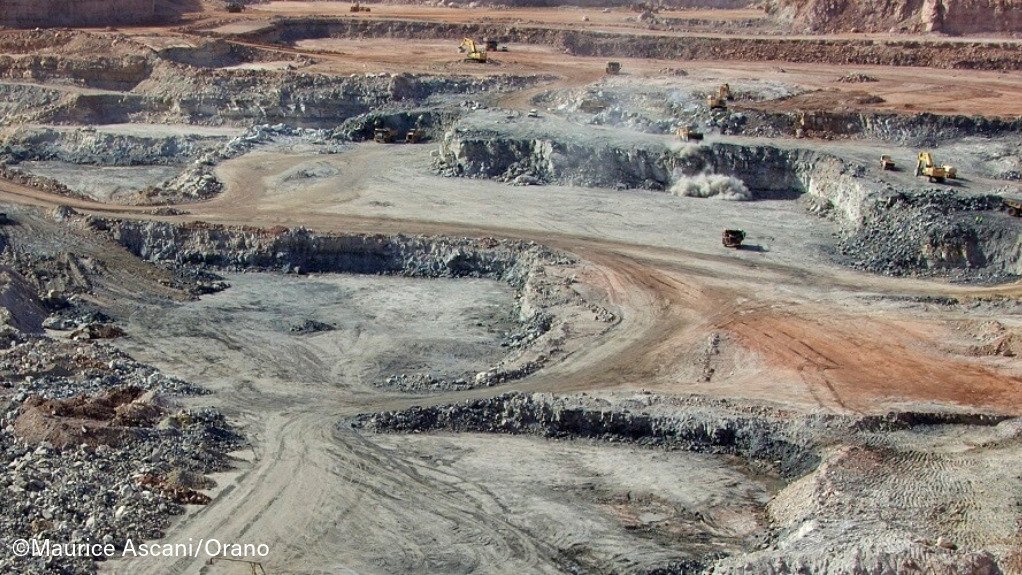
De Gaulle’s nuclear independence doctrine is the driving logic behind everything that follows. On November 3, 1959, addressing the École Militaire, de Gaulle laid out his vision of an autonomous French deterrent — “a strike force that could be deployed at any time and anywhere,” built specifically so France would never depend on another nation’s nuclear umbrella.
It’s worth explaining why this mattered for uranium sourcing specifically. Academic research into France’s nuclear resource strategy found that France deliberately avoided relying on the United States, Canada, or even uranium-rich Australia — not because African uranium was cheaper (it demonstrably wasn’t, given the infrastructure costs of developing mines in Niger and Gabon from scratch) but because French control over the supply chain mattered more than the price.
A nuclear deterrent that depends on another country’s willingness to sell you the raw material isn’t really independent. France’s entire “force de frappe” doctrine created a direct incentive to secure uranium sources it could control politically, not just commercially — exactly the kind of leverage former African colonies were positioned to provide.
Part Two: The Scandal — Independence Day, Plus Three and a Half More YearsSection Heading
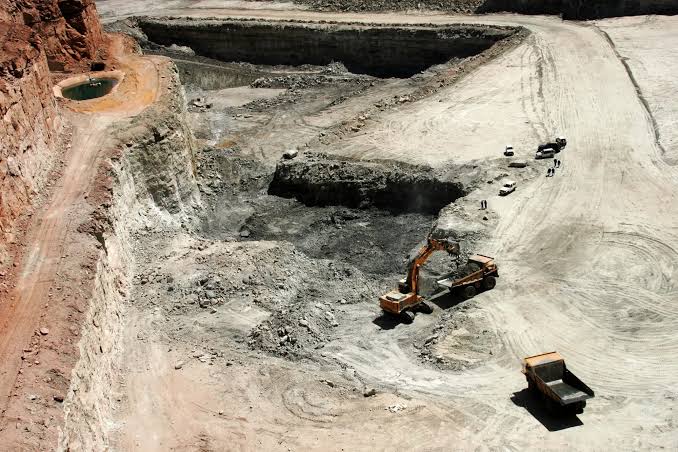
Here’s the concrete, undisputed scandal that shows how this doctrine actually operated in practice. France’s nuclear weapons testing program began not in the Pacific, but in the Algerian Sahara, at the Reggane and In Ekker test sites, starting with the “Gerboise Bleue” test in February 1960.
The timeline is worth stating precisely, since the dates alone make the point. Algeria won its independence from France in 1962. French nuclear testing at Reggane and In Ekker continued anyway — for three and a half more years, finally ending only in February 1966.
This wasn’t testing conducted with the consent of a colony still under French rule. This was a newly independent nation, having just won its sovereignty through one of the twentieth century’s longest and bloodiest independence wars, watching a former colonial power continue detonating nuclear devices on its own soil for years afterward — because the weapons program’s needs outweighed any real deference to the sovereignty France had just formally recognized.
There’s a human cost worth noting, since it’s part of the documented record. These tests dispersed radioactive fallout across the region, with exposure levels to local populations later acknowledged by French authorities as having been underestimated at the time.
Part Three: Where Niger’s Uranium Fits
Bring the story back to Niger directly, now with the fuller context established. As Algerian independence forced France’s nuclear testing program to relocate to the South Pacific in 1966, and as the broader force de frappe program accelerated toward its first thermonuclear test, France’s need for a uranium supply chain it fully controlled became even more strategically urgent.
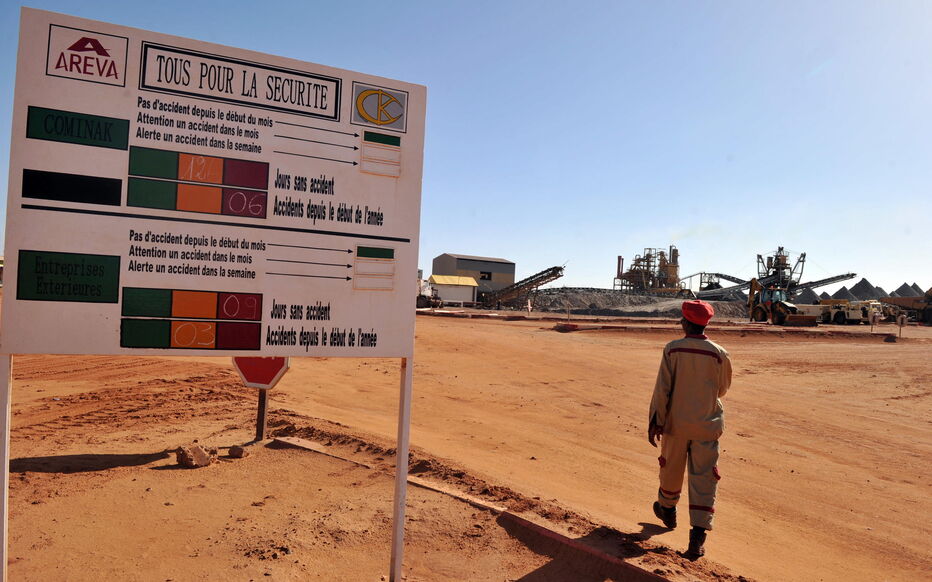
The timing connection is worth stating honestly and precisely, without overstating what’s proven. Niger’s foundational uranium protocol was signed in July 1967, and the CEA’s broader African uranium strategy — spanning Niger and Gabon specifically — is documented by researchers as designed to serve both civilian and military nuclear needs simultaneously, reducing French dependence on external, potentially unreliable uranium markets.
The Canopus test’s own technical details offer the clearest link between the weapons program and enriched uranium specifically. France’s first thermonuclear test, Operation Canopus, detonated on August 24, 1968 — the year immediately following Niger’s foundational uranium protocol — used a device with a lithium-6 deuteride secondary “jacketed with highly enriched uranium,” producing a 2.6-megaton yield, the largest nuclear device France ever tested.
This connection deserves careful, honest framing. No single public document proves that specific Nigerien ore was refined into the highly enriched uranium used in this specific test. But the broader pattern is undisputed: France’s nuclear weapons program, at the exact moment Niger’s uranium protocol was being formalized, urgently needed secure, French-controlled uranium sources, and treated the sovereignty of the nations providing that uranium as negotiable when the weapons program’s needs were at stake.
Part Four: The Human Cost Measured in a Different Currency
Here’s the piece’s final and most sobering point. Niger has remained among the countries with the lowest Human Development Index rankings in the world for essentially the entire duration of its uranium relationship with France — a resource-rich nation that has not seen its mineral wealth translate into broad national prosperity.
This doesn’t mean uranium extraction alone explains Niger’s development challenges. But a nation whose most valuable resource helped power a former colonial ruler’s independent nuclear arsenal, while that same nation remained among the world’s poorest by every human development measure, deserves to have that juxtaposition stated plainly rather than left unexamined.
The Myth vs. The Reality
| What people assume | What actually happened |
| France’s nuclear weapons testing program operated primarily on French Pacific territory, respecting the sovereignty of newly independent African nations | French nuclear testing began in Algeria and continued there for three and a half years after Algerian independence |
| Niger’s 1967 uranium protocol was negotiated purely as a civilian energy resource arrangement, unrelated to French military nuclear ambitions | The protocol was formalized during the exact period France’s nuclear weapons program was actively securing African uranium sources for both civilian and military needs |
| French nuclear testing ended cleanly with the transition to Pacific test sites | Testing at Reggane and In Ekker continued for years past Algeria’s independence, only relocating once that pressure became untenable |
| Niger’s uranium wealth would naturally have translated into national prosperity over six decades of extraction | Niger has remained among the world’s lowest-ranked nations by Human Development Index for the entire duration of this relationship |
Close: What “Independence” Meant, and Didn’t
France pursued nuclear independence relentlessly and successfully — becoming the world’s fifth thermonuclear power in 1968 — while treating the independence of the nations supplying its raw material as something considerably more negotiable, continuing weapons tests on Algerian soil years past formal independence and formalizing deeply lopsided uranium agreements with Niger during the same strategic window.
This is the geopolitical backdrop sitting behind every other piece of this blog’s Niger uranium coverage — not simply a commercial relationship between a mining company and a mineral-rich nation, but a resource relationship shaped by one of the twentieth century’s most urgent national security programs, one that had already shown, in Algeria, exactly how far it was willing to go when sovereignty and the bomb came into conflict.aste the final body section here.
Sources and further reading.