

For decades, the money in people’s pockets across British West Africa didn’t come
from a central bank answerable to the people who used it.
It came from a private commercial bank. One that was founded not by bankers
with a mission to serve the region, but by a shipping company looking for a new
line of business. And for a long stretch of colonial history, that bank held
something close to a monopoly on distributing the region’s actual physical
currency.
This wasn’t a bank that simply served the region’s economy. For a long time, it was
the region’s economy — quietly, from behind the counter.
Here’s What Actually Happened
The story starts with a man who wasn’t a banker at all. Alfred Lewis Jones was a
Liverpool shipping magnate who ran Elder Dempster, the shipping line that
dominated trade routes between Britain and West Africa. Shipping was his
business. Banking became his opportunity.
In 1892, the African Banking Corporation had taken over an existing banking
operation in Lagos. Within a year, the corporation wanted out — the Lagos
business wasn’t where its real interests lay. That opening is where Jones stepped
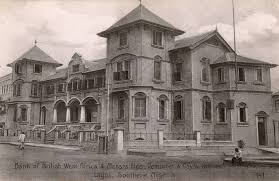
in. Between 1893 and 1894, Jones and Elder Dempster formed the Bank of British
West Africa (BBWA), taking over the Lagos operation, with the bank’s head office
based in Liverpool.
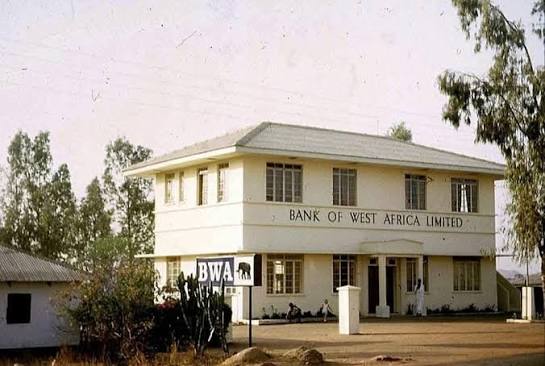
From there, it expanded fast. Agents were established in Freetown, Sierra Leone,
and Bathurst, the Gambia, in 1894. A branch opened in Accra, on the Gold Coast,
in 1896.
Here’s the detail that matters most: BBWA’s core early business wasn’t loans, and
it wasn’t deposits. It was being the sole distributor of British silver coin across the
region — a position that handed the bank monopoly-level control over the actual
physical currency circulating in people’s hands.
Now here’s the myth-check. It’s tempting to think of BBWA as an early central
bank, given how central it became to the region’s monetary system. It wasn’t.
There was no actual central bank in British West Africa at this point — BBWA was
a private, profit-driven commercial institution that simply ended up performing
central-bank-like functions because no public alternative existed. That
distinction matters, because a private company answering to shareholders was
never structurally designed to prioritize the region’s broader economic wellbeing
over its own commercial interests.
The Bank That Talked Like an Empire
You don’t have to guess at the bank’s strategic thinking. Jones said it out loud.
At BBWA’s first annual general meeting in 1895, Jones laid out the logic behind
the bank’s mission in blunt terms: a country that succeeds in introducing its own
currency and language into a new territory succeeds, in large part, at capturing
that territory’s trade for itself. That wasn’t a passing comment. It was the stated
strategic thesis behind the entire venture — currency wasn’t just a service the
bank was offering the region. It was explicitly understood, from the very top, as a
tool for locking in British commercial dominance.
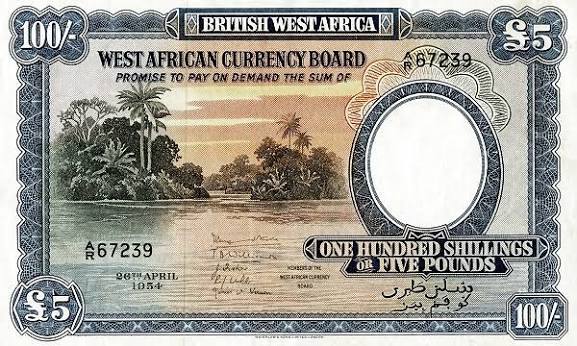
That thesis got institutional backing in 1912, when Britain established the West
African Currency Board. BBWA wasn’t sidelined by this new official body — it
became the Board’s agent, responsible for actually distributing the region’s
official coins in exchange for British sterling. Rather than losing its central role,
the bank became even more deeply embedded in how currency moved through
the region.
Quiet Power, Uneven Access
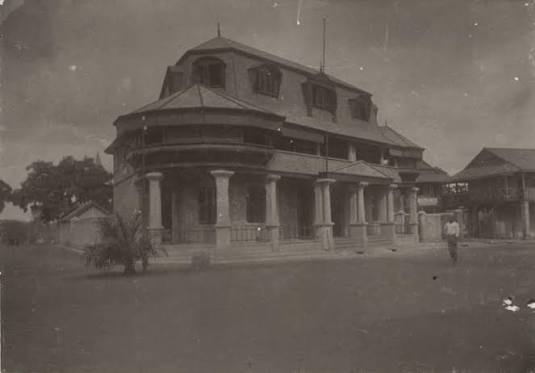
Who did the bank actually serve? Primarily colonial administrators, European
merchants, and the trade-finance needs of the export-import economy —
financing the movement of commodities like palm oil and palm kernels out of the
region and manufactured goods back in.
Here’s the harder truth: the bank did very little lending to indigenous West
Africans. This wasn’t purely a matter of explicit racial exclusion written into policy
— it was structural. The bank’s lending standards required collateral, and the
colonial economy had been built in a way that left most Africans without the kind
of assets or property recognized as acceptable collateral in the first place. A
bank that presented itself as bringing sound, modern finance to the region
simultaneously built a credit system that most of the region’s own population
couldn’t actually access.
That pattern held for decades. It didn’t meaningfully shift until after Nigeria’s
independence in 1960, when the institution — by then renamed and restructured
— began extending significantly more credit to indigenous customers.
The Myth vs. The Reality
| What people assume | What actually happened |
|---|---|
| BBWA was a neutral financial institution modernizing the region’s economy | It was a shipping company’s commercial venture, openly framed by its own founder as a tool for capturing trade through currency and language |
| The bank simply distributed official currency as a public service | It held a monopoly on silver coin distribution and profited directly from that position |
| Colonial-era banking was broadly accessible once introduced | The bank’s lending structurally excluded most indigenous West Africans for decades, due to collateral requirements the colonial economy denied them |
| The 1912 West African Currency Board replaced BBWA’s role | BBWA became the Board’s agent, deepening rather than reducing its role in the region’s currency system. |
Why This Still Matters
This is the institution standing quietly behind the last two stories in this series —
the currency board that replaced indigenous money, and the demonetization of
cowries and manilas that followed. BBWA was the plumbing running behind both
of those systems, distributing the currency that made the whole shift possible,
and profiting from every stage of it.
The bank didn’t stay BBWA forever. It went through name changes and
restructuring over the decades, eventually becoming known as First Bank of
Nigeria — today one of the region’s oldest surviving financial institutions. But it’s
worth remembering how that institution actually began: not as a public trust
built to serve a region’s economy, but as a shipping company’s side venture into
controlling that region’s money.
Next in this series: how West Africa’s own indigenous trade networks — the ones
running long before any of these institutions arrived — actually worked.