

West Africa didn’t need Europe to invent money for it.
Long before a colonial coin ever touched West African soil, the region already
had functioning currency systems — some recognized and used across a trade
zone stretching from Lake Chad to the upper reaches of Senegal. That’s not a
small regional economy. That’s a currency system spanning thousands of miles,
centuries before anyone in Europe decided West Africa needed “real” money.
So here’s the actual question worth asking: colonial currency wasn’t introduced
because West Africa lacked money. It was introduced because Europe needed a
currency it could control. This isn’t a story about West Africa getting modernized.
It’s a story about who got to decide what counted as real money — and who
didn’t.
Here’s What Actually Happened
Before we talk about what replaced it, let’s be clear about what already existed —
because this part gets erased more often than any other piece of this history.
West Africa ran on a multi-currency system, and it was far more sophisticated
than “primitive barter.” Cowrie shells functioned as a widely recognized,
standardized trade currency across an enormous cross-regional zone. In the
Niger Delta, manilas — metal currency rings — circulated alongside them. Asante
traders further south used gold dust as currency, particularly for larger
transactions. Iron bars, cloth, and salt also functioned as currency in various
regions, depending on local trade relationships.
These currencies weren’t randomly used — they worked together. In many areas,
cowries handled smaller, everyday transactions while gold handled larger ones,
forming a dual-currency system that had real technical strengths: cowries were
difficult to counterfeit, portable, and widely recognized across huge distances,
which reduced the risk and cost of trading with people outside your immediate
community.
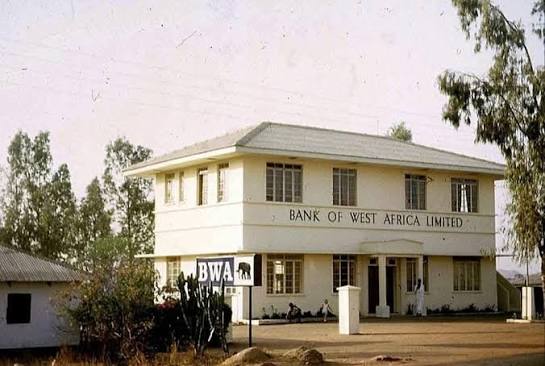
European currency entered the picture gradually, not all at once. From the 1890s,
the Bank of British West Africa began issuing silver coins and notes into
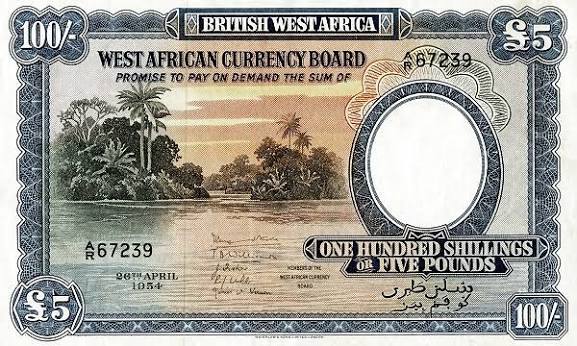
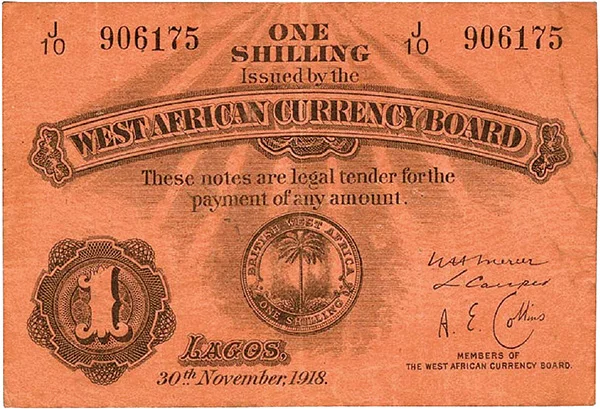
circulation. But the real turning point came in 1912, when Britain formally
established the West African Currency Board (WACB) — a body that issued the
British West African pound, a single colonial currency used across Nigeria, the
Gold Coast, Sierra Leone, and the Gambia.
Here’s the myth-check. This wasn’t an overnight currency swap where cowries and
manilas vanished the moment colonial money showed up. Multiple currencies
circulated side by side for years — in some places, for decades. The idea that
colonial currency simply and cleanly replaced an outdated system misses most
of what actually happened.
Why This Wasn’t Just About Convenience
The West African Currency Board wasn’t designed around what local economies
actually needed day to day. It was designed around something else entirely:
colonial export earnings.
Here’s the mechanism, in plain terms. The Board tied the supply of official
currency directly to the colonies’ export economy — meaning the amount of
British West African pounds in circulation would swell during harvest and export
season, when cash crops like palm oil, cocoa, and groundnuts were being bought
and shipped out, and then tighten again the rest of the year. The currency
system, in other words, was built to serve the flow of goods leaving West Africa —
not the everyday commercial needs of the people living in it.
And colonial currency didn’t spread on its own merits. It was pushed into
circulation through force, specifically through taxation. Colonial administrations
required taxes — like the hut tax — to be paid in colonial currency, not in cowries,
not in gold dust, not in any of the currencies people had used for generations.
That single requirement did enormous work: it pushed people into the cash crop
economy and wage labor system just to get their hands on the currency the
colonial state now demanded from them.
Quietly, this did something deeper than just swap out coins. It detached money
from the local trust networks and trade relationships indigenous currencies had
supported for generations, and re-tethered it to colonial administrative control
and international commodity markets instead.
What Got Lost — And What Refused to Disappear
Some of what got lost is straightforward: the informal trust systems and local
price-setting norms that indigenous currencies had carried for generations
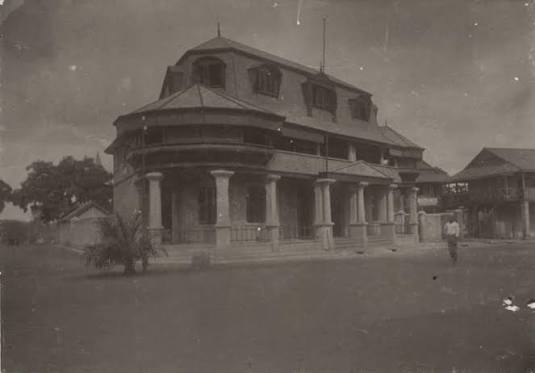
didn’t transfer over to colonial money. On top of that, colonial banks operated
under rules that restricted lending to African entrepreneurs — meaning the new
financial system that replaced indigenous currency wasn’t actually built to help
Africans build capital within it.
But not everything went quietly.
Cowries, in particular, refused to disappear on command. Even after being
officially demonetized, they kept being used to calculate value and even to trade
directly in local marketplaces — people simply kept using a currency the colonial
state had declared no longer valid. One especially well-documented case shows
cowrie use persisting for five decades along the border between what is now
Burkina Faso (then Haute Volta) and the Gold Coast, long after officials
considered the transition complete.
The switch itself was also far messier than official records suggest. Historical
accounts describe what were literally called “money muddles” and exchange
“swindles” during the demonetization period — as people were forced to trade old
currency in for new at exchange rates they had no control over, often at a real
loss.
The Myth vs. The Reality
| What people assume | What actually happened |
|---|---|
| West Africa had no real currency system before colonization | TA sophisticated, cross-regional multi-currency system — cowries, manilas, gold dust, and more — had functioned for centuries |
| Colonial currency simply modernized an outdated barter system | Colonial currency replaced a working system, and did so gradually, unevenly, and at real cost to the people forced to make the switch |
| The currency transition was quick and complete | Indigenous currencies circulated alongside colonial money for years, and cowrie use persisted in some regions for decades after official demonetization |
| Colonial currency was introduced mainly for convenience and trade efficiency | It was structured around colonial export earnings and used as a tool to force people into the tax and cash crop system |
Why This Still Matters
This wasn’t modernization for its own sake. It was a currency system built first to
serve colonial export economies and tax collection, and only second — if at all —
to serve the people actually trading, saving, and building livelihoods within it.
This piece of history also sets up something that’s still directly relevant today: in
1945, French West Africa would get its own version of this story, with the creation
of the CFA franc — a currency created under colonial rule that, in modified form,
is still in circulation in parts of the region today. Currency sovereignty in West
Africa isn’t a settled historical question. It’s a live one.
Next in this series: the CFA franc’s creation in 1945 — a currency built to outlive
the empire that made it.